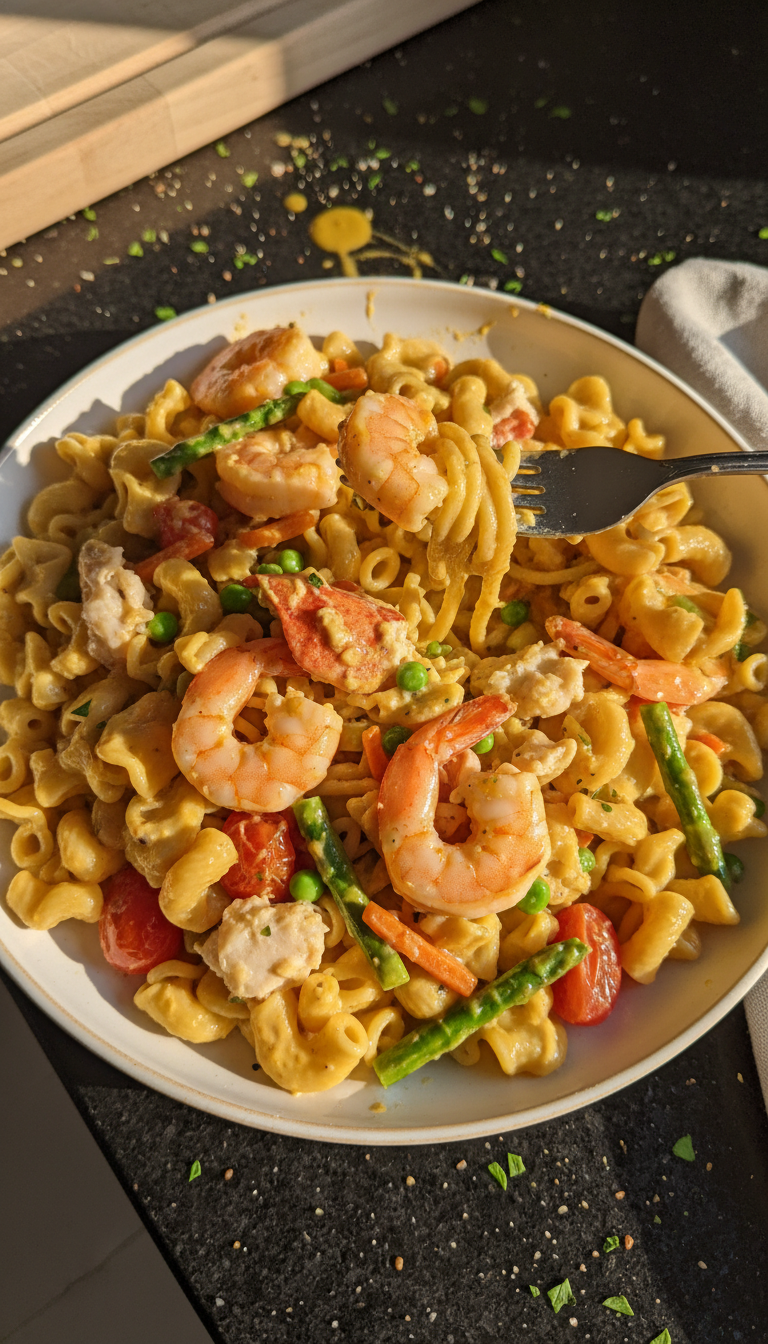
Shrimp & Lobster Pasta Primavera
Highlighted under: Global Flavors
I absolutely love creating vibrant dishes that truly showcase fresh seafood. When I came up with this Shrimp & Lobster Pasta Primavera, I wanted to combine the sweet, delicate flavors of the shellfish with colorful, crisp vegetables and al dente pasta. This recipe has become a favorite in my home, not just for its incredible taste, but for how it reflects the joys of cooking with seasonal produce. It’s perfect for special occasions or simply enjoying a night in with loved ones.
Creating this dish was an adventure in blending flavors and textures that complement each other beautifully. I experimented with different vegetables—zucchini, bell peppers, and asparagus—which brought both color and nutrition to the plate. The trick is to sauté the vegetables just enough to retain their crunch, adding a delightful contrast to the tender seafood and pasta.
The first time I made this, the combination of fresh lobster and shrimp really elevated the dish. I recommend using a splash of white wine to deglaze the pan after cooking the seafood, which adds an amazing depth of flavor that brings everything together.
Why You Will Love This Recipe
- A mesmerizing blend of tender shrimp and succulent lobster.
- Bursting with colorful, fresh vegetables.
- Perfect for impressing guests or a romantic dinner.
Perfecting Your Pasta
The choice of pasta is essential in this dish—linguine or fettuccine provides an ideal canvas for the vibrant flavors of the shrimp and lobster. I recommend cooking the pasta just until al dente, as it will continue to absorb flavors while meeting the other ingredients in the skillet. Pay attention to the timing; typically, this will range from 8 to 10 minutes. If you discover your pasta is becoming too soft, you can cool it quickly under cold water to stop the cooking process.
Don't forget to generously salt the boiling water; this is your main opportunity to season the pasta itself. A well-seasoned pasta will enhance the overall dish. Also, reserving a cup of pasta water before draining can be a game-changer—it helps adjust the sauce's consistency later if necessary, promoting a nice creamy texture.
The Secrets of Sautéing
Sautéing is more than just cooking; it's about coaxing out the best flavors from your ingredients. Begin with a medium heat to allow the vegetables—zucchini, bell pepper, and asparagus—to soften without burning. If you're unsure, a good indicator is that the vegetables should be tender but still retain some crunch after about 5 minutes. Stirring occasionally ensures even cooking and prevents sticking, which is crucial for developing that lovely, caramelized flavor.
When adding garlic and cherry tomatoes, resist the urge to crank up the heat; a gentle sauté introduces depth without allowing the garlic to burn—leading to bitterness. You want the tomatoes to burst nicely, releasing their natural juices, which create a beautiful sauce base when combined with the subsequent seafood addition.
Balancing Flavors with Wine
White wine is a star ingredient here, playing a dual role of flavor enhancer and deglazer. When you pour the wine into the skillet, be sure to scrape the bottom with a spatula to lift any rich, browned bits stuck to the pan—this is where much of the flavor rests. Choose a dry white wine, like Sauvignon Blanc, which complements the seafood while not overpowering the dish’s other subtle flavors.
Cook down the wine until it's reduced by about half; this concentrates its flavor while also helping to meld the ingredients together. Look for a slight shimmer and vividly fragrant steam—these are signs that your sauce is on the right path. Pairing the finished dish with an extra splash of wine on the side can enhance the dining experience, creating a luxurious feel with every bite.
Ingredients
Gather these ingredients to start your culinary adventure:
Ingredients
- 8 oz linguine or fettuccine pasta
- 1 cup shrimp, peeled and deveined
- 1 cup lobster meat, cooked and chopped
- 1 medium zucchini, sliced
- 1 red bell pepper, sliced
- 1 cup asparagus, trimmed and cut into 2-inch pieces
- 3 cloves garlic, minced
- 1/2 cup cherry tomatoes, halved
- 1/2 cup white wine
- 2 tbsp olive oil
- Salt and pepper to taste
- Fresh parsley, chopped for garnish
- Grated Parmesan cheese (optional)
Ensure everything is prepped and ready for an efficient cooking process.
Instructions
Follow these steps to perfect your dish:
Cook the Pasta
In a large pot, bring salted water to a boil. Add the pasta and cook according to package instructions until al dente. Drain and set aside.
Sauté the Vegetables
In a large skillet, heat olive oil over medium heat. Add the zucchini, bell pepper, and asparagus, sautéing for about 5 minutes or until just tender. Stir in the garlic and cherry tomatoes, cooking for an additional 2 minutes.
Add the Seafood
To the skillet, add the shrimp and lobster. Cook for about 3-5 minutes until the shrimp is opaque and fully cooked. Pour in the white wine, scraping up any bits from the bottom of the pan.
Combine with Pasta
Add the cooked pasta to the skillet with the seafood and vegetables. Toss to combine and season with salt and pepper to taste. Allow everything to heat through, about 2 minutes.
Serve
Plate the pasta primavera, garnishing with fresh parsley and Parmesan cheese if desired. Enjoy your delightful dish!
Clean as you go for a stress-free cooking experience!
Pro Tips
- For an extra kick, add a pinch of red pepper flakes while sautéing the vegetables. You can also swap the seafood for your favorite alternatives
- scallops work great in this recipe!
Ingredient Substitutions
If lobster is not available, you could substitute it with crab meat or even scallops for an equally indulgent twist. The key is to ensure that whatever seafood you choose, it should be cooked and have a sweet flavor to complement the shrimp. For a vegetarian alternative, try tossing in some chickpeas or additional vegetables like mushrooms or bell peppers, which can provide textural contrast and filling properties.
If you're looking for gluten-free options, consider using gluten-free pasta alternatives made from rice or quinoa. These substitutions maintain the dish's integrity while accommodating dietary restrictions. Always check the cooking times on gluten-free pasta as they can vary significantly from traditional options.
Storage and Reheating Tips
Shrimp and Lobster Pasta Primavera can be stored in an airtight container in the refrigerator for up to 2 days. However, note that seafood tends to lose its delicate texture upon reheating. I recommend reheating gently on low heat, adding a splash of water or broth to keep the dish moist. Covering the pan can help retain steam, ensuring the pasta doesn’t dry out during reheating.
Freezing is not typically recommended for seafood dishes due to texture changes once thawed; however, if you need to, you can freeze the pasta primavera before adding any seafood. Simply follow your recipe until the vegetables and pasta are combined, then freeze. When ready to serve, thaw thoroughly and gently reheat before incorporating the seafood, ensuring it is fresh for the best flavor.
Serving Suggestions
To elevate your dining experience, serve this dish with a crisp green salad dressed with lemon vinaigrette. The acidity of the vinaigrette pairs excellently with the rich flavors of the seafood and complements the bright vegetables, ensuring a balanced meal. Fresh crusty bread can also be served on the side, perfect for scooping up any leftover sauce.
For an added touch of elegance, consider garnishing the pasta primavera with lemon zest or a squeeze of lemon juice right before serving. This not only enhances the dish's presentation but also brightens the flavors, bridging the sweetness of the seafood with the dish's freshness.
Questions About Recipes
→ Can I use frozen seafood?
Yes, you can use frozen shrimp and lobster. Just make sure they are fully thawed and drained before cooking.
→ What vegetables can I substitute?
You can use any vegetables you like! Broccoli, snap peas, or even spinach would work wonderfully.
→ How do I store leftovers?
Store leftovers in an airtight container in the refrigerator for up to 2 days. Reheat on the stove over low heat, adding a splash of water if needed.
→ Can I make this dish gluten-free?
Absolutely! Simply substitute the pasta with a gluten-free alternative.
Shrimp & Lobster Pasta Primavera
Created by: The Zestcrafters Team
Recipe Type: Global Flavors
Skill Level: Intermediate
Final Quantity: 4 servings
What You'll Need
Ingredients
- 8 oz linguine or fettuccine pasta
- 1 cup shrimp, peeled and deveined
- 1 cup lobster meat, cooked and chopped
- 1 medium zucchini, sliced
- 1 red bell pepper, sliced
- 1 cup asparagus, trimmed and cut into 2-inch pieces
- 3 cloves garlic, minced
- 1/2 cup cherry tomatoes, halved
- 1/2 cup white wine
- 2 tbsp olive oil
- Salt and pepper to taste
- Fresh parsley, chopped for garnish
- Grated Parmesan cheese (optional)
How-To Steps
In a large pot, bring salted water to a boil. Add the pasta and cook according to package instructions until al dente. Drain and set aside.
In a large skillet, heat olive oil over medium heat. Add the zucchini, bell pepper, and asparagus, sautéing for about 5 minutes or until just tender. Stir in the garlic and cherry tomatoes, cooking for an additional 2 minutes.
To the skillet, add the shrimp and lobster. Cook for about 3-5 minutes until the shrimp is opaque and fully cooked. Pour in the white wine, scraping up any bits from the bottom of the pan.
Add the cooked pasta to the skillet with the seafood and vegetables. Toss to combine and season with salt and pepper to taste. Allow everything to heat through, about 2 minutes.
Plate the pasta primavera, garnishing with fresh parsley and Parmesan cheese if desired. Enjoy your delightful dish!
Extra Tips
- For an extra kick, add a pinch of red pepper flakes while sautéing the vegetables. You can also swap the seafood for your favorite alternatives
- scallops work great in this recipe!
Nutritional Breakdown (Per Serving)
- Calories: 500 kcal
- Total Fat: 20g
- Saturated Fat: 5g
- Cholesterol: 150mg
- Sodium: 300mg
- Total Carbohydrates: 40g
- Dietary Fiber: 4g
- Sugars: 6g
- Protein: 30g